
Three thousand dollars in sales is what my garage brought in last month. What actually stayed with me was $1,575 before taxes. I am 53, I live in Columbus, Ohio, and I refinish castoff furniture. I buy dressers, side tables and chairs, strip them, sand them, stain them, and sell them.
That is the whole business. For eighteen months I kept every receipt, from a 240-square-foot garage. It took 14 months to reach $3,000 in a single month, and it cost $850 before I sold anything. Six weeks passed before the first sale.
Now the real question for you. You have a garage full of supplies and want to know if the craft pays like a part-time job. It can, but only after you subtract purchase prices, supplies, booth rent, admin costs and tax. The work runs 22 to 28 hours a week.
Here is the honest version. By the end you can weigh your own storage, vehicle and free evenings against my numbers. Then test three pieces on Facebook Marketplace before you buy another thing.
| Line item | Monthly amount | What it covers |
|---|---|---|
| Revenue | $3,000 | 18 pieces sold, average $340 each |
| Cost of goods | $800 | What I paid for the furniture itself, about $65 a piece |
| Supplies | $250 | Stripper, sandpaper, stain, brushes, polyurethane |
| Booth rent | $275 | Antique mall space where 60% of pieces sell |
| Other | $100 | Truck gas, packing blankets, listing fees |
| Net before taxes | $1,575 | What is left before federal and state tax |
The hobby is refinishing castoff furniture

The hobby is taking furniture that someone gave up on and making it worth buying again. When I say furniture, I mean castoff dressers, side tables, chairs. Not raw lumber and not a workshop project built from scratch.
This is buying, not building. The piece already exists. My job is to bring it back to a condition someone will pay for, and every step on that list is unpaid until the last one.
There are seven tasks, and they run in a fixed order. I source the piece, strip the old finish, sand it smooth, stain and seal it, photograph it in good light, write the listing, then load it and deliver. Skip one and the sale does not happen.
The workspace is my two-car garage, 240 square feet of it, in Columbus. Half of that floor is waiting pieces and finished pieces. The other half holds the stripper and stain, which need the door rolled up and a fan running when I use them.
My first piece was a $40 dresser from an estate sale. I stripped it, sanded it, stained it, photographed it and listed it, and the cash came in last, weeks after the $40 went out. That order never changes, no matter how many pieces you sell.
The words nobody explains when you start
Startup cost was $850 before first sale
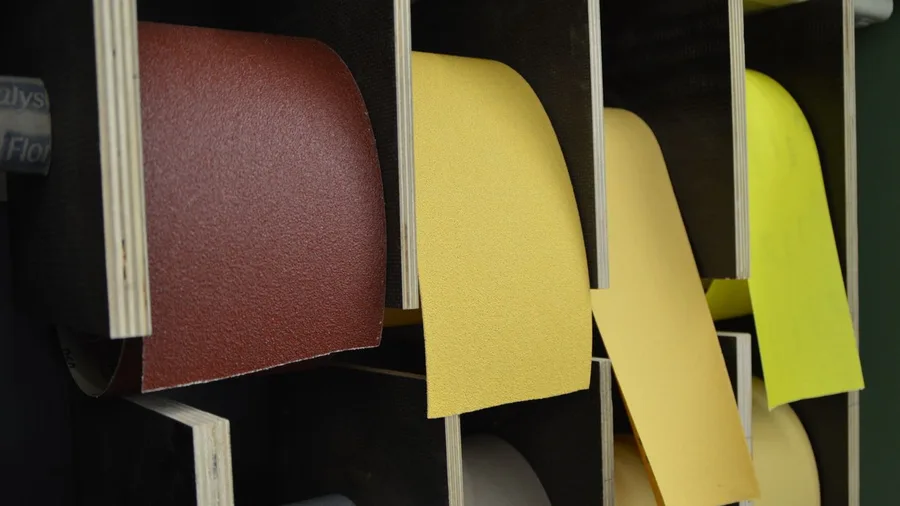
I spent $850 before I sold a single piece. The $600 went to finishing supplies. I bought stripper, sandpaper in several grits, stain, sealer, brushes, and rags. Then I bought a used orbital sander for $250. Six hundred plus two hundred fifty is eight hundred fifty.
The first piece added $40 to that. I found it at an estate sale, paid cash, and loaded it into the back of my truck. Cash out before my first sale came to $890. I had no revenue coming back.
Six weeks passed before anyone paid me. In those weeks I learned how much stripper a dresser actually takes, how long stain needs before you wipe it, and how to shoot a photo without glare on a fresh finish. Every one of those lessons cost supplies, not cash, but the supplies were already bought and gone.
The $850 is the entry cost before inventory. It does not include the pieces themselves, which run $20 to $150 depending on what you find. Budget the supplies first, then a few weeks of buys, and you are closer to $1,000 out of pocket before the first sale.
A first sale is not profit. If I sold that first $40 piece for $180, I still had to subtract the $40, a share of the supplies I used, and my weekends. The $850 has to be earned back before anything is actually ahead.
⚠️ COMMON MISTAKE
A first sale is not profit
That $190 dresser was not $190 of profit. It was $190 minus the $40 purchase minus roughly $25 in supplies minus about six hours of work. Until you count all three, you are paying yourself in optimism.
Estate sales and Marketplace supply inventory
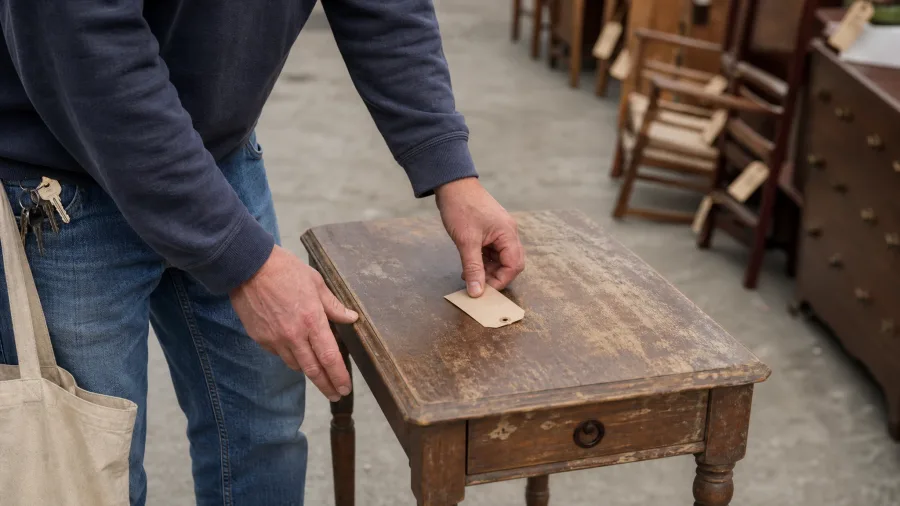
Pieces come from two places: estate sales and Facebook Marketplace. Both let you walk up, look a piece over, and pay cash. I hit estate sales on Saturday mornings and scroll Marketplace on weekday evenings.
Purchase prices ran $20 to $150 a piece, averaging $65. I hunted 4 to 6 hours a week. That is the real inventory cost: an average $65 buy plus those sourcing hours, all before the piece gets stripped.
I passed on a lot. No structural damage. No missing hardware. No heavy veneer peel. Those three rules saved me more money than any finish I ever learned. A cheap piece with a broken frame is not cheap.
That is the part people underestimate. The average piece costs $65 and four to six hours of hunting. A garage full of supplies is not inventory. Until a piece is bought, it does not exist.
Storage matters here. The garage holds pieces waiting for work and pieces finished and waiting for buyers. A bad buy eats space and hours before it ever sells, and sometimes it never does.
Sourcing is unpaid hunting with no guarantee. Two or three weeks can pass with nothing worth buying. Staying strict on the screen is what keeps a slow month from turning into a garage full of unsellable furniture.
What one average piece actually earns
Assumes a $65 buy and $15 of supplies per piece; averages, not a guarantee on any single piece
18 pieces in a typical month is what produces the $3,000.
Pricing at three times purchase moves pieces

I price a piece at three times the purchase price plus supplies. That rule is where I start, not where I finish. A $65 dresser from an estate sale gets a tag near $195, and that covers the buy, the stripper, the stain and a little of my time.
Where things actually land is a wider spread, from $180 at the low end to $850 at the top, averaging $340 a piece. Some pieces earn the top of that range because the wood is good and the finish came out clean. Others sell cheap because a chip or a sagging drawer keeps the buyer walking.
Anything I tag above $850 sits for weeks unless it carries a known maker's stamp. I learned to leave those pieces on the floor at the estate sale rather than bring them home to age in my garage.
The channel decides how fast a sale happens. About 60% of my sales run through an antique mall booth that costs $275 a month in rent, whether I sell one piece or none. The other 40% go on Facebook Marketplace, where there is no rent but also no walk-in foot traffic.
That booth bill is the part people forget. On the average $340 sale, $275 buys my spot on the floor before a single dollar of purchase price or supplies comes out, which is why gross is not margin. It all gets subtracted before the $1,575 net in a typical month is real.
Month 14 was the first $3,000 month
It took 14 months before a single month crossed $3,000. For the first six months I ran under $800 a month, and some of those months felt lucky.
There was no viral moment. No buyer walked in and took six pieces off the floor in one afternoon. The climb came from doing the same things more often: sourcing on Saturdays, finishing on weekday evenings, listing and delivering on Sundays, week after week.
By month 14, the routine finally stacked up into $3,000 in sales. By month 18, $3,000 was a typical month rather than a spike, and I could watch it repeat instead of hoping.
The part that does not show up in a sales figure is the runway. Fourteen months of evenings and Saturdays went by before the money got steady, and the tax folder of receipts grew the whole way. I needed to see my own history before I believed any month would repeat itself.
📈 How the 14 months actually went
Months 1–3
Learning finishes and photography, under $500 in sales each month.
Months 4–6
First steady buyers on Marketplace, still under $800 a month.
Months 7–10
Booth opens at the antique mall; costs go up before sales do.
Months 11–13
Sourcing gets disciplined; average sale price climbs past $300.
Month 14
First $3,000 month, on 18 pieces sold.
Month 18
$3,000 is now a normal month rather than a good one.
$3,000 gross leaves about $1,575 net

In a typical $3,000 month I keep about $1,575 before taxes. The other $1,425 goes out the door.
Here is where it goes. Cost of goods eats $800, which is the furniture itself. Supplies take $250 for strippers, stains, sandpaper and hardware. Booth rent is $275. Other costs, from gas and tape to the new photos and delivery, run about $100. Add those up and you get $1,425.
$3,000 in sales minus $1,425 in costs leaves $1,575 before federal and state taxes. That is the number worth comparing to a part-time job, not the headline.
It surprised me how much of the gross was never mine. Nearly half goes out in purchases and expenses before you even get to tax, which means every bad buy and every re-stain eats into an already thin slice.
💡 PRO TIP
Open a second bank account on day one
Every sale goes in, every supply run comes out. When the quarterly tax payment is due, the money is sitting in one place instead of mixed into your household account. The IRS self-employment tax page explains the rules and the rate, so check the current figure there rather than trusting a number from a blog.
It takes 22 to 28 hours weekly

The $1,575 only means something once you know what it cost in time. For me that was 22 to 28 hours a week, almost all of it after 6 p.m. and on Saturdays, because finishing work does not fit into a lunch break. Stripper has to sit. Stain has to dry. You cannot sand for forty minutes, put it down, and pick it up at 1 p.m.
The hours split unevenly across the week. Sourcing took 4 to 6 hours, finishing took 14 to 16, and selling and delivering took another 4 to 6. Finishing is the block that swallows your weekends.
A typical Friday looked like this: out of my day job at 5, in the garage by 6, sanding until 9 with the door cracked for ventilation. Saturday morning I drove to estate sales with a flashlight and a tape measure. Sunday I photographed and listed.
That is the trade. Every $3,000 month costs 22 to 28 hours a week, which is close to a part-time job's schedule on top of the one you already have. The $1,575 before taxes is what those evenings and Saturdays buy you.
Sit with that for a minute before you spend the $850. If losing two nights and most of a weekend every week for 18 months sounds like too much, the arithmetic already told you.
One thing that helped: I kept a simple log of hours per piece for the first three months. That is how I found out a $65 side table was taking me nine hours and a $340 dresser was taking seven.
Is the $1,575 worth your evenings?
What the money buys
- $18,900 a year before taxes at the $1,575 monthly pace
- Work you can do in your own garage on your own schedule
- Skills that get faster, so the same hours earn more over time
- A booth that sells while you are at your day job
What it costs you
- 22 to 28 hours a week, mostly evenings and Saturdays
- A garage half-filled with furniture and fumes
- Two to three week dry spells with no income
- Booth rent due whether anything sells or not
The hardest part is sourcing, not sanding

Sandpaper is the easy part. The real constraint is finding pieces worth buying. I spend 4 to 6 hours a week on sourcing. If those hours come up empty, the schedule and margin both break, no matter how good the finish is.
I once went three weeks without a single buy. I drove to four estate sales on a Saturday in February, stood in cold garages, and walked out with nothing. The pieces were either broken or priced like the seller already knew what they had. Three weeks with no inventory means three weeks with no sales, which means no revenue. That is the part nobody warns you about.
Finishing is predictable: I know a dresser takes about 12 hours of work, and I know what it will look like when done. Sourcing is not predictable. Buying badly or overpaying erases the margin no matter how careful your finish. A chair that needs hidden repairs costs more in time and shop space than it ever earns back at sale.
That is why I screen hard. No cracks or wobbles in the frame, no missing handles or hinges, no veneer lifting at the edges. A bad buy ties up $65, eats a corner of the garage for weeks, and adds hours before it ever sells.
The $65 average buy only works if the 4 to 6 hours a week turn up a piece that clears that screen. Dry spells carry no revenue. Before you buy more supplies, test whether you can find three good pieces in a month without lowering your standards.
Insurance and an LLC cost $1,100 yearly

The boring part is a bill that arrives whether or not anything sells. I pay $500 a year for an LLC and $600 a year for a liability insurance rider. That is $1,100 yearly in admin. An LLC is a legal entity you register for the business, and the rider extends your homeowner's policy to cover furniture you sell. Some months produce less than the bill. The bill still comes.
Separately, all my sale money runs through a dedicated checking account. I move a slice into savings each month for quarterly taxes so the tax bill never surprises me. The $1,575 monthly net is before federal and state taxes, and I quote no rate here because it depends on your bracket. For the current rules and rates, go straight to the IRS self-employment tax page.
The admin is modest, but it is not optional. If a buyer slips and a leg gives way in their hallway, that rider is what stands between you and a lawsuit. The LLC keeps the business separate from your personal money. Both cost less than a single bad accident.
That $1,100 comes out of the same months that make the $1,575 before taxes. Set aside $92 a month for it, and the bill stops being a surprise. Set aside the quarterly tax money from the first sale, not the first profitable month.
This works only with storage and a truck

The work pays like a part-time job, not passive income. That is the plain answer to whether this fits you, and it fits a narrower set of people than the $3,000 headline suggests. You need a garage or a dry basement that can hold pieces waiting to be stripped beside pieces waiting to be sold. You need a truck or a van, because a dresser does not ride home in a sedan.
You need 20-plus hours a week, and you need patience for sourcing. Of all the requirements, patience is the one people underestimate. The other seven sections of this article are built on that edge, so run your own life against it before you spend a dollar.
Walk away if the storage is a rented unit with a monthly bill, if the only vehicle is a compact car, or if what you want is quick cash without dust and mess. Sanding is loud, stripper smells, and a half-finished chair sits in the way until it sells.
The real offer, one more time: $3,000 in sales at month 14, $1,575 before taxes in a typical month, 22 to 28 hours a week, $850 to start, $1,100 a year in admin. Line a weekend shift up against that and decide honestly.
So test it before you commit. Sell three pieces on Facebook Marketplace first, and only then think about more supplies or a booth. Three pieces tell you whether you have the storage, the vehicle, the patience and the evenings. If all three sell and you still want a fourth, you have your answer.
Frequently Asked Questions
How much money can I realistically make refinishing furniture?
In my typical month I sell $3,000 of furniture and take home $1,575 before taxes. That took 14 months to reach and 22 to 28 hours a week. Your number depends on what you can buy cheaply near you and how many pieces you can move in a month.
Do I need an LLC to sell refinished furniture?
I formed one, and it cost $500 a year. It separates the business from your personal money. A liability insurance rider costing around $600 a year covers you if a piece fails after a sale, which is the risk an LLC alone does not cover.
How long before I make my first $1,000?
For me it was about four months, and that is a reasonable expectation. The first pieces sell slowly because you are learning finishes and photography at the same time. Expect the first six weeks to be expense only, with no sales at all.
Is buying furniture at estate sales worth it?
It is where nearly all of my inventory comes from, and I average $65 a piece. The key is a hard screen: no structural damage, no missing hardware, no heavy veneer peel. Skip anything that fails, however cheap it looks.
Can I do this out of an apartment?
Realistically no. You need ventilation for stripper and stain, and you need space for pieces waiting for work and pieces waiting for pickup. A 240-square-foot garage is about the smallest setup that works.
What is the biggest mistake when starting?
Buying too much furniture before selling anything. I ended up with a garage full of pieces and no buyers. Sell three before you buy a fourth, and do not open a booth until Marketplace is already selling steadily.
The garage, the truck and the 20 hours decide it
This is a part-time job, not passive income. It suits you if you have garage or basement space, a truck or van, 20 hours a week or more, and the patience to hunt. Walk away if any of those is missing.
Walk away too if you wanted quick cash without dust and mess. I measure it all from a 240-square-foot garage and a stack of receipts. The numbers: $850 to start, a $40 first piece, month 14 before sales hit $3,000, then $1,575 net before taxes in a typical month.
So do not buy more supplies yet. Sell three pieces on Facebook Marketplace first, in daylight, and see what they bring. The headline is sales. The decision is net, hours and storage. If those three pieces clear, grow with receipts, not hope.
Start with the three-piece test
Before you buy another can of stain or put a deposit on a booth, list one finished piece on Marketplace and see what the market says back. The math in this article only works if pieces actually sell.