
Saving $2,000 every month for 60 months equals $120,000 in cash, which market growth lifted to $148,500. That arithmetic turned my finances around after starting from zero at age 41. I had only $8,000 in emergency cash.
Take Ernesto, a 36-year-old logistics worker. He felt behind on retirement after clearing his student debt. Ernesto is an illustrative composite with realistic numbers, not a real client. Many people assume catching up requires wild gambles like crypto or penny stocks to make up for lost years.
That gamble usually fails. I chose a clear asset allocation instead. That is how you split your money between stocks, bonds, and cash. I committed $2,000 each month to simple index funds, spreading the cash across workplace and personal accounts.
Five years of steady deposits brought my total balance to $148,500 at age 46. You do not need speculative trading to build a six-figure cushion before turning fifty. Consistent cash beats market luck.
Starting at Zero Required Extreme Savings Over Exotic Bets

I avoided high-risk bets entirely because starting at age 41 left me zero room to absorb a major loss. That meant ruling out single stocks, crypto, and options trading.
A shorter runway to retirement actually shrinks your risk tolerance instead of expanding it. When you only have 15 to 20 years left, a bad bet can permanently wipe out your future. I chose broad index funds because I needed reliable growth rather than an exotic gamble.
Savings volume did the heavy lifting.
I committed to investing $2,000 every single month, which totaled $24,000 each year for five straight years. Take Ernesto, 36, who is currently mapping out his own delayed start. Ernesto is an illustrative composite with realistic numbers, not a real client. In those initial years, your personal cash contributions drive almost all your early momentum.
The market adds growth over time, but your monthly deposit builds the starting base. Pouring steady cash into the market created a six-figure foundation before investment returns even had time to compound.
| Asset Class | Core Holding | Target % | Current Value | Account Location |
|---|---|---|---|---|
| US Total Stock Market | VTI (Vanguard Total Stock ETF) | 70% | $103,950 | 401(k) & Roth IRA |
| International Equities | VXUS (Total International ETF) | 15% | $22,275 | Workplace 401(k) |
| Dividend / Value Equities | SCHD (US Dividend Equity ETF) | 10% | $14,850 | Taxable Brokerage |
| Short-Term Treasuries | SGOV (0-3 Month Treasury ETF) | 5% | $7,425 | Roth IRA Buffer |
The 70 Percent US Total Market Core Drives Growth
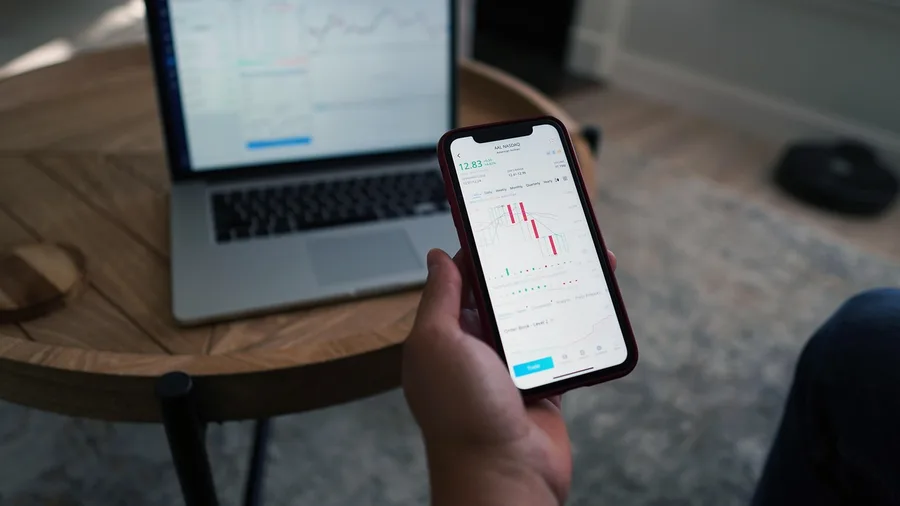
Vanguard Total Stock Market ETF forms the main engine of my portfolio at 70 percent. That is an ETF, a basket of stocks traded under one ticker.
That single fund holds $103,950 of my current $148,500 balance. It spreads money across thousands of American companies, letting me capture corporate earnings growth without the danger of a single business going bankrupt. Broad expansion mattered far more to me than chasing high yields in these first five years.
Yield-heavy portfolios can limit your total capital growth early.
Some funds prioritize paying a dividend. That is a cash payout a company shares with its investors from its profits. I chose to focus on total growth instead, splitting my monthly investment into two $1,000 buys on the 1st and the 15th. That routine smoothed out price swings and removed guesswork.
Automating those two purchases took the stress out of daily market swings. Every dollar went straight to work buying broad slices of the American economy twice a month.
🧭 2 quick taps · about 20 seconds
Find Your Late-Start Catch-Up Blueprint
Select your current age and monthly cash capacity to jump to your priority move.
Start with this question
- What is your current age bracket as you start investing? Under 40 (like Ernesto at 36) · Age 40 to 50 (like my start at 41)
Then read the part written for you
- Focus on Core Broad Market Growth — With 20+ years until retirement, your longest runway is capital appreciation. Funnel every available dollar into a broad market index fund. 70% VTI Core Read: The 70 Percent US Total Market Core Drives Growth →
- Maximize Tax-Advantaged Buckets First — High savings volume allows you to fill a workplace 401(k) and Roth IRA simultaneously, sheltering your rapid gains from annual taxes. $2,000 / month Read: Tax Shelters Matter More When Accumulating Quickly →
- Capture the Match and Automate Paydays — Take the employer match immediately, then use automated payroll splits on the 1st and 15th to remove emotion from your catch-up plan. $95,000 in 401(k) Read: Moving Money on Payday Stopped the Second-Guessing →
- Build a Simple Three-Fund Solo Setup — Open an IRA and a taxable brokerage account, leaning heavily on broad US and international funds with a tiny cash stabilizer. 5% Cash Buffer Read: Five Percent Cash Equivalents Protect Against Panic Selling →
Fifteen Percent International Equities Adds Needed Diversification

I hold 15 percent of my portfolio in international stocks to protect against a prolonged slump in the American economy. That money sits in the Vanguard Total International Stock ETF, known as VXUS.
That is $22,275 of my total. It spreads my savings across thousands of companies outside the United States. Betting everything on one country is dangerous when you want to retire at age 61. An economy can stay flat for years.
Foreign stocks protect your net worth.
Net worth is the value of everything you own minus what you owe. US stocks have beaten foreign markets recently, but overseas companies trade at lower prices. Holding them shields my money if the dollar weakens or domestic growth slows down over the next 15 years.
Global balance lowers your risk.
Key Late-Start Investing Terms Decoded
Ten Percent Dividend Value Anchors the Brokerage Account
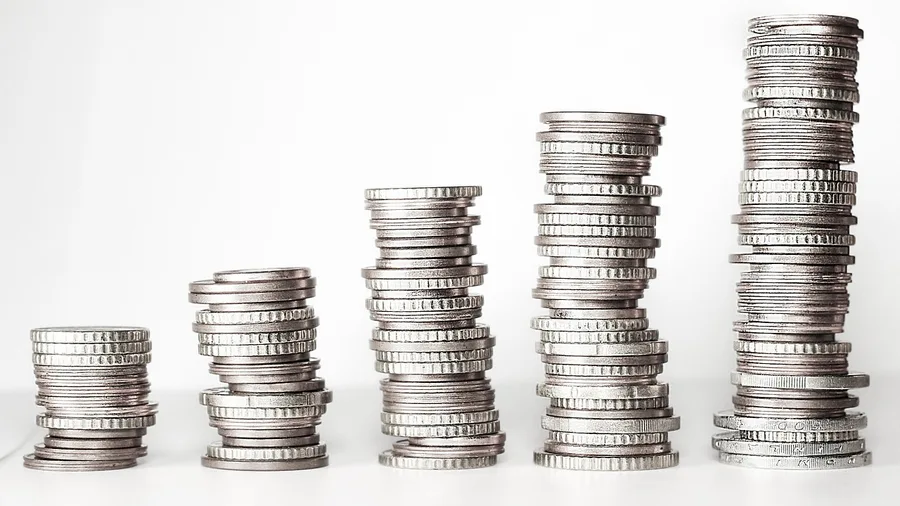
I put ten percent of my portfolio into the Schwab U.S. Dividend Equity ETF. That equals $14,850 in my taxable brokerage account today. It anchors my cash flow and keeps my money working.
Consider Ernesto, an illustrative 36-year-old saver with realistic numbers rather than a real client. Stock prices fall often. Dividend checks still land every three months. I set my account to reinvest every payout into fresh shares immediately. Seeing share counts rise provides real encouragement when the market looks flat.
That visual proof matters.
These dividend companies are established businesses with steady profits and lower price swings. They give my portfolio extra stability without moving money into bonds. I cap this at ten percent. It protects growth. Chasing higher yields would take away from the faster growth of broad market index funds.
You can set this up in minutes. Log into your brokerage account, buy the fund, and turn on automatic reinvestment so you never have to time cash distributions.
SCHD Holding — At a Glance
📊 Portfolio Share
10% ($14,850)
🏛️ Account Location
Taxable Brokerage
🏷️ Expense Ratio
0.06% per year
🔁 Dividend Handling
Auto-Reinvested
Role in Portfolio
Lowers overall portfolio volatility while delivering consistent quarterly cash distributions.
Five Percent Cash Equivalents Protect Against Panic Selling

I keep five percent of my portfolio in the iShares 0-3 Month Treasury Bond ETF. That equals $7,425 in short-term government paper today. It pays regular monthly interest while keeping my principal safe.
This fund costs almost nothing to hold. Its expense ratio is just 0.07 percent. That is the annual fee a fund company charges to manage your money. This asset acts as a stabilizer. It sits entirely separate from my $8,000 emergency fund. That is the cash reserve kept in a bank account for surprise personal bills.
I never mix the two.
Short-term government bonds carry almost zero risk from shifting interest rates. They stay steady. When stock prices drop hard, this cash pool holds its value. That protection stops panic. It keeps me from selling my stock funds at a loss during scary headlines.
Check your cash buffer this week. If you hold zero stable assets, buy a low-cost Treasury fund in your brokerage account to steady your nerves.
⚠️ COMMON MISTAKE
Mixing Emergency Cash With Portfolio Buffers
Never count your internal portfolio cash buffer as your household emergency fund. Keep three to six months of living expenses in an accessible high-yield savings account before directing cash into short-term treasury funds like SGOV.
Tax Shelters Matter More When Accumulating Quickly

I spread my $148,500 total portfolio balance across three different account tiers. I keep $95,000 in a workplace 401(k). That is a retirement plan through an employer that lets you invest pre-tax money directly from your paycheck.
Next, I hold $38,500 in a Roth IRA. That is an individual retirement account funded with after-tax money so every withdrawal in retirement is tax-free. The remaining $15,000 sits in a standard taxable brokerage account. Pre-tax contributions lowered my current tax bill. I used those tax savings to fund my yearly Roth IRA limit.
Every dollar had a job.
I set a strict order for every paycheck. First, money went to my workplace plan. Second, an automated transfer filled my Roth IRA. Then I moved remaining cash to taxable shares. That stops tax drag. Shielding money from yearly dividend taxes protects your compounding speed.
Set your funding order today. Automate your paycheck deductions this week so your tax shelters fill up first before you spend a single dime.
💸 My Monthly $2,000 Cash Routing Order
Workplace 401(k) Pre-Tax Split
Deduct $1,200 automatically from monthly paychecks to capture employer match and reduce taxable income.
Roth IRA Automated Transfer
Route $583 each month on payday directly into the Roth IRA to hit the annual contribution limit.
Taxable Brokerage Overflow
Direct the remaining $217 per month into the taxable brokerage account for SCHD dividend holdings.
Quarterly Dividend Sweep
Reinvest all portfolio dividends automatically into underlying index shares to accelerate share accumulation.
Moving Money on Payday Stopped the Second-Guessing

I set up automatic bank transfers for the 1st and 15th of every month so the cash moved before fear could stop me. The money left my checking account the day my paycheck cleared.
Matching those transfers to my bi-weekly pay schedule removed daily second-guessing. When the market suffered steep drops, my full $2,000 monthly contribution still bought index fund shares on schedule. I never held cash back to wait for lower prices. Trying to guess market bottoms only leads to missing the recovery.
I deleted every investing app.
Staring at daily price swings creates anxiety that leads to impulsive trades. To protect my plan, I limited portfolio check-ins to a single quarterly review where I logged my balances into a basic spreadsheet. That boundary stopped me from watching daily headlines. It kept my energy on funding the accounts.
Automation turns saving into an unthinking reflex. When deposits clear on their own, consistency takes care of itself.
The math does the rest.
Late-Start Investing: Speculation vs High-Volume Indexing
Speculative Chasing (High Risk)
- Trading individual growth stocks and penny stocks
- Attempting to time market bottoms and tops
- High transaction fees and frequent tax drag
- Severe drawdown risk with no time to recover
High-Volume Indexing (My Strategy)
- Broad index funds covering thousands of companies
- Automated monthly deposits regardless of headlines
- Tax-sheltered growth across 401(k) and Roth IRAs
- Low expense ratios below 0.08% across all funds
Five Years In Proves Consistency Trumps an Early Start

Reaching $148,500 after 60 months proves that five years of discipline can reset a late start. Out of that balance, $120,000 came directly from my own paychecks. The other $28,500 came from investment growth.
That growth marks a major shift in momentum. At this balance, a normal seven percent market gain produces more than $10,000 in yearly growth without any extra effort. Over the next 15 years to age 61, the math shifts in my favor. Compound growth will slowly take over the heavy lifting.
Saving this much required firm trade-offs.
Maintaining a $24,000 yearly contribution rate meant keeping my living expenses flat for five years. When I received pay raises at work, I sent the extra cash straight to my index funds. I avoided upgrading my car or my housing. That kept my savings rate completely protected.
A late start can be saved within five years if you treat savings volume as your primary lever. You do not need exotic bets to build real wealth. Steady cash flow does the work.
5-Year Catch-Up Math: Cash Volume vs Market Growth
Assumes $2,000 monthly contributions over 60 months with broad market returns
Past market performance does not guarantee future results. Investment returns fluctuate annually.
Frequently Asked Questions
Can you retire comfortably starting from zero at age 40 or later?
Yes, but it requires an aggressive savings rate of 20 to 30 percent of your income. By heavily funding low-cost index funds across tax-advantaged accounts like a 401(k) and Roth IRA, 15 to 20 years provides sufficient time for compound growth to build a substantial nest egg.
Why not pick individual tech stocks to catch up faster?
Individual stocks carry company-specific default risk. If a concentrated position suffers a 50 percent loss, a late starter does not have a 30-year runway to recover. Broad index funds capture market gains while eliminating the threat of a single bankruptcy destroying your savings.
What should I do if I cannot afford to invest $2,000 every month?
Start with whatever dollar amount you can sustain, such as $200 or $500 monthly, and automate the transfer. The priority is building the automated savings habit and capturing any employer 401(k) match, then increasing your monthly deposit as your income grows.
Should late starters hold bonds or stay 100 percent in stocks?
A 100 percent equity portfolio maximizes growth potential but introduces severe volatility. Holding a small 5 to 10 percent position in short-term government paper or cash equivalents prevents emotional panic selling during major market downturns.
How often should I rebalance a catch-up portfolio?
Review your portfolio once a year or whenever an asset class drifts more than 5 percent away from your target allocation. You can often rebalance simply by directing your new monthly deposits toward the lagging fund rather than selling existing shares.
Raw Savings Rate Beats High-Risk Market Gambles Every Time
The single most important rule for late starters is saving aggressively rather than gambling on speculative picks. No stock tip or risky fund can match the power of regular cash deposits. Controlling your spending creates that money.
Moving from zero dollars at age 41 to $148,500 at age 46 came down to one habit. I put $2,000 into broad index funds every single month without pause. The math did the heavy lifting.
When you have twenty years until retirement, your savings rate matters more than chasing market returns. Automate your monthly transfer today so the cash invests before you can spend it. That simple habit restarts your timeline.
Check Your 401(k) Payroll Deductions Today
Log into your workplace benefits portal and verify that your automatic retirement contributions are scheduled for your next paycheck.