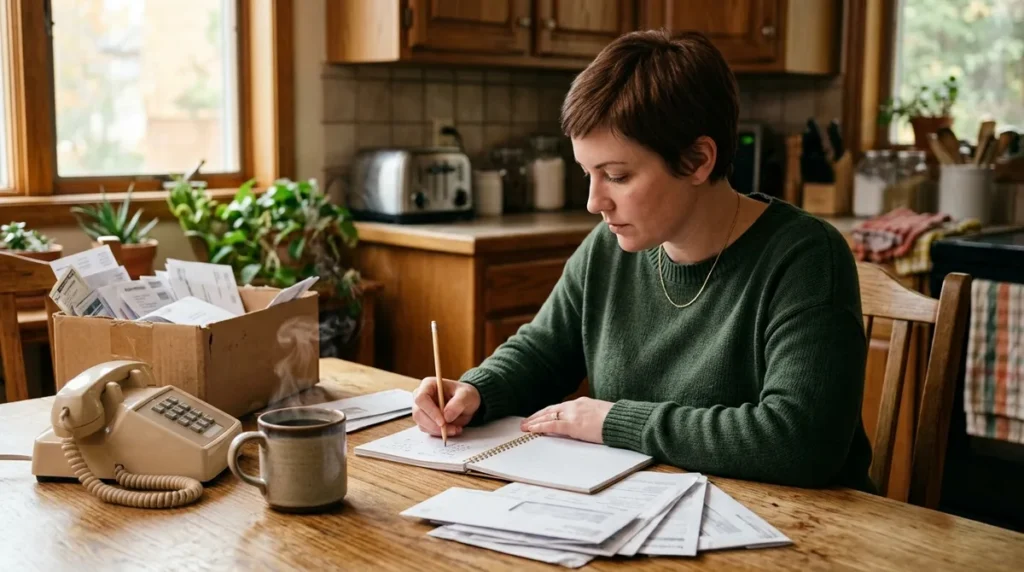
Losing four hundred dollars every month to background digital costs drains your checking account before payday ever arrives.
That steady leak adds up to nearly five thousand dollars a year vanishing into cloud storage and monthly fees.
Most people assume convenience is cheap because each individual charge only costs ten or fifteen dollars. Piling up twelve different automated renewals quietly strips away disposable income without you noticing the damage.
To find out what happens when you pull the plug on modern digital overhead, I spent thirty days living entirely by the financial rules of 1995. This article breaks down the exact math behind that test, the hidden costs of nostalgia, and how much cash remains in your pocket when entertainment requires a physical medium.
🎯 THE SHORT ANSWER
The Thirty-Day Savings Verdict
Living like it was 1995 for thirty days saved me $684 total by eliminating subscription services, ordering zero delivery food, and paying entirely in physical cash for discretionary spending.
Why Modern Digital Creep Destroys Your Savings Rate

People assume that modern spending habits only suffer because things cost more today. That is false.
The real problem is how easy it is to pay. When your credit card lives inside five different apps, handing over twelve dollars feels like nothing.
You do not feel it leave. In 1995, every extra purchase meant physical paper money left your hand. That loss made you stop and think.
Digital taps completely bypass that pause. Small charges add up fast. If you lose fifty dollars a month to unused app fees, that is six hundred dollars a year gone.
The trade-off is losing the speed of instant checkouts. You have to type your card number each time. That tiny hassle stops you from buying things you do not need. Open your bank app today and delete your saved card from three apps.
📼 2 quick taps · about 20 seconds
Find Your 1995 Savings Potential
See which nostalgic spending cuts will drop the most cash into your bank account.
Start with this question
- How many monthly digital subscriptions do you currently pay for? 1 to 3 services · 4 or more services
Then read the part written for you
- Heavy Subscription Drain — Cutting your recurring digital overhead will yield the fastest cash return. $220/mo Read: What Happens When You Delete Every Subscription →
- Moderate Convenience Leak — Replacing digital delivery fees with grocery meal planning saves hundreds instantly. $180/mo Read: Why Cash-Only Grocery Shopping Changes Your Cart →
- Severe Delivery Overspend — Your takeout habit is masking your true savings rate every month. $350/mo Read: Why Modern Digital Creep Destroys Your Savings Rate →
What Happens When You Delete Every Subscription

How much money do you actually waste on digital services you rarely use? You probably signed up for them one at a time without noticing.
Canceling three video streaming services, two music apps, cloud storage, and a news site cuts your monthly fixed costs right away. That single move drops $142 from your budget on day one.
That is $142 gone.
Multiplying that monthly cut by twelve months saves $1,704 over a year.
That is money back in your pocket.
Stopping automatic charges requires zero ongoing discipline. Without apps pushing endless content suggestions, your free time shifts toward free options like library books.
You keep more cash.
⚠️ COMMON MISTAKE
The Wi-Fi Trap
Do not cancel your home internet connection thinking 1995 meant dial-up; this experiment targets consumer spending choices, not your ability to work or pay bills online.
Why Cash-Only Grocery Shopping Changes Your Cart

Walking into the supermarket with exactly one hundred dollars in paper bills completely transforms how you buy food. That limit forces a choice.
You stop tossing impulse snacks into the cart because you are physically counting paper money before reaching the checkout lane. It hurts to hand over the last bill.
My weekly grocery bill dropped from $160 to $105. That shift saved real cash.
You drop convenience items like pre-chopped vegetables and frozen dinners. Whole carrots cost less.
Cooking simple ingredients from scratch requires planning ahead. That habit eliminates expensive last-minute takeout orders on busy nights.
Over four weeks, this single behavioral shift saved $220 in food costs alone. That money stays in your bank account.
Review your grocery receipts this Sunday. Leave the plastic cards at home for your next trip.
Grocery Spending — At a Glance
💳 Old Bill
$160 / wk
💵 New Bill
$105 / wk
📉 Monthly Total
$220 Saved
The Rule
Never bring a card when the paper limit is spent.
How Entertainment Works Without an Algorithm

Eight dollars covers two weekend movie rentals from a local shop instead of paying a monthly fee to scroll through streaming menus for forty minutes.
Living like it was 1995 meant renting physical media and visiting public libraries. You walk outside without headphones.
Silence costs nothing. You can pick up a physical book this week and test how much quiet you actually enjoy.
Thirty-Day Savings Calculation
Based on actual expenses eliminated during the experiment
The Real Hidden Costs of Nostalgia Living
Most people assume stepping back into the past means saving money on every single front, but retro experiments carry annoying modern costs. You will run into parking meters that only accept smartphone apps or gas stations without working cash slots. Those small unexpected compromises force you to spend extra time or buy things you did not plan on.
You cannot completely cut off the digital world without hurting your job or daily duties. The point is not to smash your phone with a hammer or throw away your tools. Instead, look at your phone this week and cancel three apps that do nothing for you.
Most paid tools are just expensive wallpaper masking boredom. Keep the ones that help you earn a living, and drop the rest.
Best For
Which 1995 Habits Are Worth Keeping Forever

You do not need to throw away your computer to capture the financial benefits of this test.
Keep three rules from the experiment. Pay for groceries in cash once a week. Audit your subscriptions every ninety days. Ban food delivery apps permanently.
Those three changes keep about $300 of monthly money in your pocket.
That is $3,600 a year.
Financial control is rarely about earning more money.
It is about cutting the leaks that drain your bank account while you sleep.
📅 The 30-Day Transition Schedule
Day 1 to 5
Audit every active subscription and cancel all services used less than once a week.
Day 6 to 15
Withdraw physical grocery cash and commit to cooking every single meal at home.
Day 16 to 30
Replace screen-based evening entertainment with reading, walking, and analog hobbies.
Frequently Asked Questions
Did you really cancel your internet connection during the experiment?
No. Home internet was maintained for remote work and bill payment. The experiment targeted discretionary consumer spending, not professional utility.
How did you handle parking meters and tolls that require a smartphone?
When digital payment was mandatory for public infrastructure, I used a card. The focus was eliminating discretionary consumer apps, not breaking civil law.
Was it difficult to shop for groceries using only physical cash?
It felt awkward for the first four days. After that, carrying exact bills eliminated impulse purchases and made budgeting completely transparent.
What happened to the $684 saved during the thirty days?
The entire sum went directly into a high-yield savings account to build an emergency fund, proving how fast small cuts compound.
Can I do this experiment for just one week instead of a month?
Yes. A seven-day trial is a great way to test your subscription fatigue and see how cash-only grocery shopping feels before committing.
Reclaiming Your Monthly Balance Sheet Through Intentional Limits
Trimming digital overhead changes your annual savings rate without lowering your quality of life. You keep the cash instead of feeding apps you rarely open.
No article can tell you which modern conveniences matter most to your daily routine. A fee-only financial planner can help you weigh those choices against your long-term goals if you feel stuck.
Pick one recurring subscription to cancel today. Watch your monthly cash balance grow by the end of the week.
Ready to Audit Your Subscriptions?
Review your checking account statement right now and cancel the three apps you have not opened this month.